
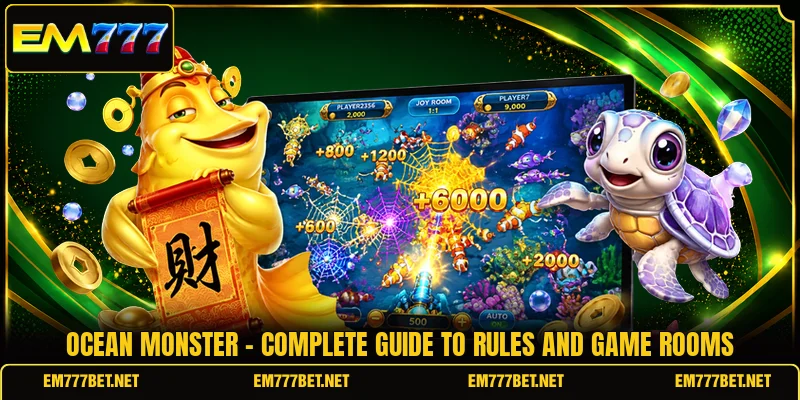
Ocean Monster brings members into a moving sea arena where targets appear with different values, speeds, and attack patterns. This guide is written for Philippine players using EM777, helping them understand controls, round flow, scoring conditions, and better shot selection without unclear claims.
Understanding Ocean Monster and its core game structure
The screen places sea creatures across several lanes while cannons stay near each member’s position, keeping movement, values, and available targets clearly visible. In Ocean Monster, each successful hit contributes according to the creature’s displayed worth, although stronger enemies usually need more accurate timing and repeated attacks. Members can select a PHP or USD room, then review the shot cost before joining an active table.
EM777 presents a direct control panel containing weapon strength, firing direction, balance details, and round information in one visible area. The pace changes when larger creatures enter, because their paths cross smaller targets and create brief chances for concentrated attacks. Ocean Monster remains easy to follow when members watch movement order, value signs, and weapon costs instead of firing without checking the scene.
Learning the rules through straightforward round-by-round decisions
Every session follows a visible sequence in which targets enter, move across the arena, receive attacks, and leave when their route or timer ends. Members should understand how shots, weapon levels, target values, and table limits connect before committing to faster actions.
How Ocean Monster rounds begin
A round starts after the room loads and the cannon activates, allowing members to aim at creatures crossing the central field. Each shot removes the displayed cost from the available balance, so the selected strength should match the intended target rather than nearby movement. Ocean Monster may introduce stronger enemies later in the cycle, making early observation useful for recognizing routes and crowded firing angles.
The opening seconds often show smaller creatures with simple paths, giving members time to test aiming speed and cannon response. When several targets overlap, the lock function can keep attention on one creature, although manual control may remain better during sudden direction changes. Members should release the target when its route becomes blocked, then shift toward a clearer option before additional shots lose value.
Reading target figures correctly
Displayed values indicate the possible return attached to a successful defeat, but they do not promise that every attack will produce an immediate result. Larger numbers usually appear beside tougher creatures, so members must compare remaining screen time with the number of shots already used. A target near the exit may look valuable, yet its limited route can make another creature a more reasonable selection.
Members can follow repeated movement patterns to see which paths remain open longer and which enemies leave the arena quickly. This observation helps separate reachable targets from crowded ones, especially when several cannons are firing toward the same section. In Ocean Monster, careful value reading supports cleaner decisions because the visible reward must always be compared with timing and weapon cost.
Choosing weapon power carefully
Weapon controls usually allow members to increase or reduce shot power before firing, creating different costs and pressure levels during one round. A low setting can test movement and response, while a higher option suits a clear target that remains visible for several seconds. Members should avoid changing strength during random movement, because sudden adjustments can create unnecessary shots without improving aim.
View more: Ocean Treasure – Simple Rules, Features, And Playing Guide
A PHP account may show local denominations, while a USD account presents values based on the selected table and wallet setting. Members should confirm the displayed figure before every major adjustment, especially when moving between rooms with different limits. The game becomes easier to manage when weapon changes follow target size, screen time, and route clarity rather than fast reactions.
Improving results with zone and target awareness
Better play comes from reading the whole arena, selecting suitable rooms, and recognizing when a creature offers enough time for focused attacks. The following methods concentrate on game-specific movement, cannon control, and target competition rather than broad advice unrelated to the round.
Selecting a suitable game room
Rooms can differ by shot cost, target pressure, table speed, and the number of active members sharing the same underwater field. New members should begin where controls remain readable and creature movement stays clear after loading. A suitable room allows enough time to test aiming, review PHP or USD stakes, and understand how rewards appear after successful hits.
Experienced members may prefer faster tables with larger targets, although higher activity also creates more competition around valuable creatures. Before entering, players should compare the minimum shot figure, room label, and expected pace shown on the selection screen. Ocean Monster works best when the chosen room matches the member’s control speed and familiarity with target routes.
Tracking movement prior to firing
Members can watch a creature briefly before attacking, because its direction, speed, and remaining distance reveal whether concentrated fire is realistic. Curved routes often create longer visibility, while straight paths near the edge may disappear before enough shots connect. This short observation period reduces wasted attacks and helps the cannon follow a cleaner line.
When a target changes direction, members should move the aim ahead of its path instead of following the body from behind. Larger enemies can block smaller creatures, so waiting for separation may produce a clearer angle than firing through a crowded section. In Ocean Monster, movement tracking matters most when several valuable targets enter together and the screen becomes difficult to read.
Using locks and manual aim
The lock feature keeps the cannon attached to one selected creature, which can help during long routes or repeated movement around the center. Members should still monitor obstacles, because another target may cross the line and reduce the usefulness of automatic tracking. Releasing the lock at the right moment allows a quick shift toward a safer creature with more remaining screen time.
Manual aim offers greater control when targets move unpredictably, split into different lanes, or appear near the edge for only a short period. Players can alternate between both methods according to route stability instead of relying on one control throughout every round. Ocean Monster rewards accurate switching because clear aim, suitable strength, and enough target time must work together before repeated shots make sense.
View more Category: Fish
Conclusion
Ocean Monster gives members a clear underwater game built around target movement, weapon selection, room choice, and timed decisions during every active round. Players can use EM777 to review controls, compare PHP or USD tables, and choose a setting that matches their preferred pace. Download the app, register an account, enter a suitable room, and start the game with careful aim and good luck.